

When you sit behind the steering wheel, your focus is naturally on where you are going and how smoothly the car accelerates. However, the most critical control system in your entire vehicle is not the engine or the steering wheel—it is the brake system. Your brakes are your primary safety feature, responsible for converting thousands of pounds of rapidly moving metal into a controlled, complete stop at a moment’s notice.
For a beginner, the machinery hidden behind the wheels can seem intimidating and overly mechanical. Yet, despite the extreme engineering involved, the fundamental operation of a vehicle’s braking system relies on basic physics: leverage, hydraulics, and friction. Gaining a clear understanding of how these principles work together allows you to make informed decisions regarding maintenance, spot mechanical issues before they become dangerous, and drive with far greater confidence.
The Core Principle: How Foot Pressure Stops a Vehicle
To understand how a car stops, it helps to follow the path of energy from your foot to the road surface. When you press down on the brake pedal, you are initiating a mechanical chain reaction designed to multiply force. A human leg simply cannot exert enough raw pressure to stop a vehicle weighing two tons or more moving at highway speeds. Therefore, the system must magnify your physical effort.
This magnification starts right at the brake pedal arm, which acts as a mechanical lever. From there, the force enters the brake booster, a component located under the hood directly behind the pedal. The booster uses vacuum pressure generated by the engine, or an electric pump in modern vehicles, to drastically amplify the physical force of your foot. This amplified force then pushes against a piston inside a component known as the master cylinder.
The master cylinder is the heart of the hydraulic side of the braking system. It converts the mechanical pushing force into hydraulic pressure by forcing specialized brake fluid through a network of secure steel lines and flexible rubber hoses leading to each individual wheel. Because liquids cannot be compressed, the fluid acts as a solid link, transferring the immense pressure instantly and equally to the braking mechanisms located at the wheels.
Disc Brakes Versus Drum Brakes
Most modern passenger vehicles utilize one of two mechanical designs at the wheels to create the friction necessary to slow the vehicle down: disc brakes or drum brakes. While they operate differently, both systems achieve the exact same goal—converting the kinetic energy of the moving vehicle into thermal energy, or heat, via friction.
The Standard of Modern Stopping: Disc Brakes
Disc brakes are the standard configuration for the front wheels of virtually all modern vehicles, and they are increasingly common on the rear wheels as well. This system functions very much like the hand brakes on a traditional bicycle.
The primary components of a disc brake system include:
-
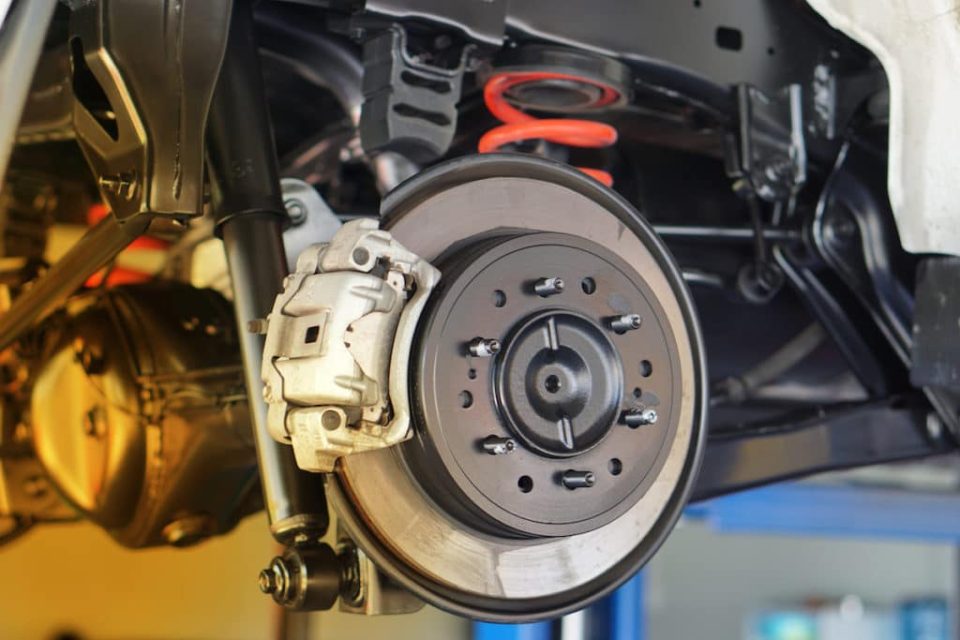
The Brake Rotor: A heavy iron disc that is bolted directly to the wheel hub. When the car is moving, the rotor spins at the exact same speed as the tire.
-
The Brake Caliper: A heavy metal housing that straddles the outer edge of the spinning rotor like a clamp. The caliper contains internal hydraulic pistons.
-
The Brake Pads: Flat steel plates backed with thick blocks of highly specialized, heat-resistant friction material. These pads are positioned inside the caliper on both sides of the spinning rotor.
When hydraulic pressure from the master cylinder reaches the brake caliper, the internal pistons push out, squeezing the stationary brake pads tightly against both sides of the rapidly spinning rotor. The immense friction generated by this clamping action slows the rotor down, which in turn stops the wheel and the vehicle.
The Enclosed Approach: Drum Brakes
While disc brakes dominate modern automotive design, many entry-level, compact, or older vehicles still utilize drum brakes on the rear wheels. Instead of clamping a flat disc, a drum brake system relies on an enclosed, hollow iron drum that rotates along with the wheel.
Inside this spinning drum sits a stationary assembly containing a hydraulic wheel cylinder and two curved, metal plates lined with friction material, known as brake shoes. When you press the brake pedal, the fluid pushes the pistons inside the wheel cylinder outward. This action forces the curved brake shoes to expand outward against the smooth internal surface of the spinning drum. The friction between the outer edge of the shoes and the inner surface of the drum brings the wheel to a stop.
While drum brakes are highly effective as parking brakes and are relatively inexpensive to manufacture, they do not dissipate heat as efficiently as disc brakes. Because the system is fully enclosed, extreme heat can become trapped inside the drum during prolonged or heavy braking down long hills, leading to a temporary loss of stopping power known as brake fade.
The Role of the Anti-Lock Braking System
In the past, slamming on the brakes during an emergency situation could cause the wheels to lock up completely, sending the vehicle into an uncontrollable skid. When tires lose traction and slide across the pavement, the driver loses all ability to steer the vehicle. To eliminate this hazard, modern vehicles are equipped with an Anti-Lock Braking System (ABS).
The ABS is an electronic monitoring system consisting of speed sensors at each wheel, a central computer module, and a hydraulic control valve assembly. While you drive, the computer continuously monitors how fast each wheel is spinning. If you brake hard on a slick or wet road surface and one wheel suddenly stops spinning entirely while the others are still moving, the ABS computer recognizes that the wheel is about to lock up and skid.
Instantly, the system takes control of the hydraulic pressure going to that specific wheel. It pulses the brake pressure—releasing and reapplying the clamping force up to fifteen times per second. This rapid pumping action keeps the wheel rolling right at the absolute limit of its traction. By preventing the tire from skidding, ABS allows the vehicle to stop in a shorter distance on slippery surfaces while ensuring the driver retains total steering control to guide the car around obstacles.
Identifying Key Warning Signs of Brake Trouble
Because your vehicle’s braking system is a collection of wearing components, it will eventually require maintenance and parts replacement. Fortunately, the system is engineered to provide clear sensory warnings when components are reaching the end of their operational lifespan. Learning to recognize these signs can keep you safe and prevent minor wear from turning into an expensive repair.
Auditory Clues
The most common warning sign is a high-pitched squealing or chirping noise whenever you apply the brakes. Most modern disc brake pads are built with a tiny, sacrificial metal tab called a wear indicator. As the friction material wears down to a critically thin layer, this metal tab becomes exposed and rubs directly against the rotor, creating a persistent squeal to alert the driver that the pads need to be replaced soon.
If this squeal is ignored, it will eventually transform into a harsh, metallic grinding or scraping noise. This signifies that the friction material on the brake pads has been completely worn away. The raw steel backing plate of the pad is now grinding directly into the iron rotor. This metal-on-metal contact ruins the smooth surface of the rotor rapidly, severely reduces your stopping power, and creates a highly hazardous driving condition.
Tactile Feedback
You can also feel issues through your foot and steering wheel. If the brake pedal feels unusually soft, spongy, or sinks all the way to the floor board before the vehicle begins to slow down, there is a serious issue within the hydraulic system. This symptom typically indicates that air has entered the brake lines or that the brake fluid level has dropped critically low due to a systemic leak.
Additionally, if you experience a distinct pulsating sensation through the brake pedal or a violent shudder in the steering wheel when slowing down from highway speeds, it means the brake rotors have suffered thermal distortion. Over time, the intense heat generated by braking can cause the flat surface of the rotors to warp slightly. When the caliper clamps down on an uneven, warped rotor, it causes the pads to bounce, sending vibrations up through the hydraulic system to your foot.
Frequently Asked Questions
Why does the brake fluid level drop inside the reservoir over time even if there are no leaks?
As your brake pads slowly wear down and become thinner, the pistons inside the brake calipers must extend further outward to push the pads against the rotors. This movement pulls more brake fluid down into the lines and calipers, causing the fluid level inside the master cylinder reservoir under the hood to drop naturally.
What is the difference between resurfacing a brake rotor and replacing it entirely?
Resurfacing, often called turning or machining, involves placing the worn brake rotor on a specialized lathe to shave off a very thin layer of metal, creating a perfectly flat and smooth surface again. However, if a rotor is heavily grooved, cracked from extreme heat, or worn past the minimum safe thickness specification established by the manufacturer, it cannot be resurfaced and must be replaced.
How does water contamination affect the performance of your vehicle’s brake fluid?
Automotive brake fluid is hygroscopic, meaning it actively absorbs moisture from the air over time. If moisture enters the system, it lowers the overall boiling point of the brake fluid. Under heavy or prolonged braking, the intense heat can cause this trapped water to boil and turn into steam. Because gas compresses easily unlike liquid, this creates a dangerous spongy pedal feeling and can result in total brake failure.
Why do some cars produce a large amount of dark dust on their front wheels after driving?
The dark residue is brake dust, which is a natural byproduct of the friction material wearing away from the brake pads during use. This is highly common with metallic or semi-metallic brake pads, which offer exceptional stopping power and heat management but shed fine metallic particles that stick to the wheels.
What does it mean when the red brake warning light illuminates on your dashboard while driving?
The red brake warning light generally indicates one of three critical issues: your parking brake or emergency brake is still engaged, the brake fluid level inside the master cylinder reservoir is dangerously low, or there has been a sudden, severe pressure loss within the hydraulic system. If the light remains on after releasing the parking brake, you should stop driving safely immediately.
Can a driver change just the brake pads, or must you always replace the rotors at the same time?
It is possible to replace just the brake pads if the existing rotors are perfectly smooth, flat, and well above the minimum thickness limit. However, installing new pads onto scored, grooved, or slightly uneven rotors will reduce your initial stopping efficiency, cause the new pads to wear out prematurely, and often generate annoying squeaking noises.
How does driving through a deep puddle of water pose a temporary risk to your braking system?
When you drive through deep water, a slick coat of moisture covers the smooth surfaces of the brake rotors and pads. This temporary layer of liquid dramatically reduces the friction between the components when you first press the pedal. If you drive through deep water, it is best to tap your brakes lightly a few times to let the friction generate enough heat to dry the surfaces off quickly.
